
FlowCore AI Smarter Real-Time Manufacturing Intelligence
Turn fragmented factory data into actionable insights to improve workflows, eliminate bottlenecks, and optimize production performance.
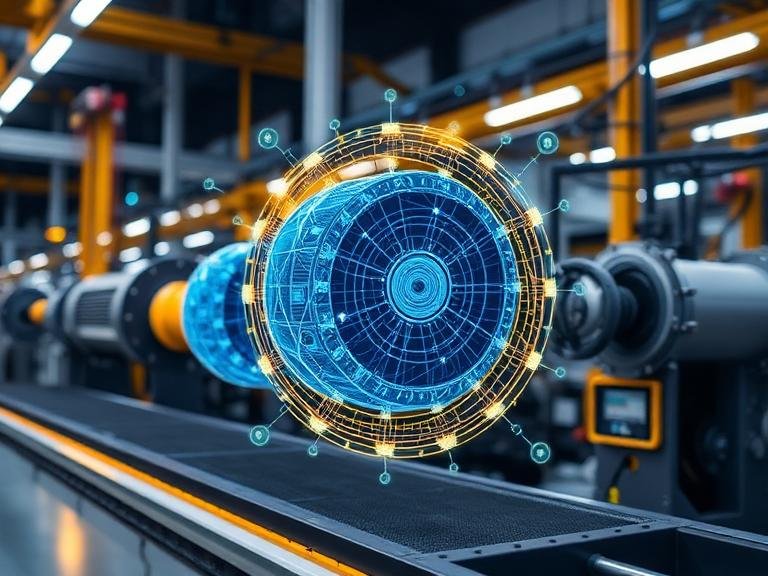
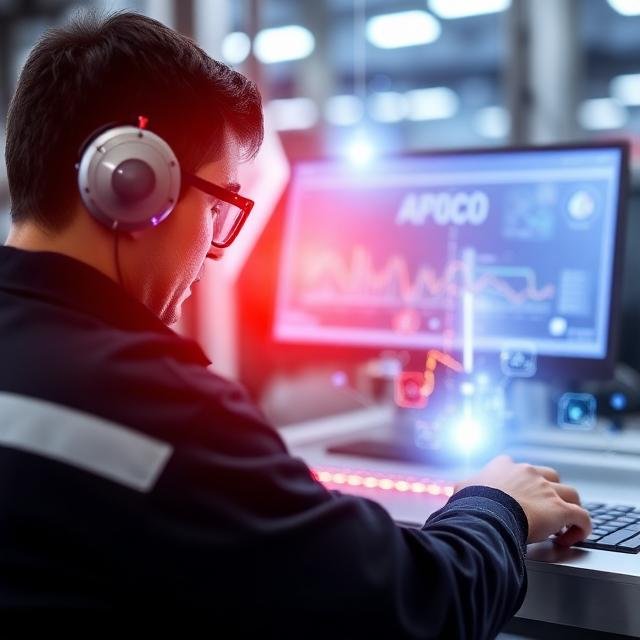
Turn Manufacturing Data Into Real-Time Intelligence
FlowCore AI brings clarity to one of the most complex environments in modern industry: manufacturing operations. Facilities generate large volumes of data from machines, assets, materials, and personnel, yet much of this data remains fragmented or underutilized. This often leads to reactive decision-making instead of proactive optimization.
FlowCore AI converts real-world operational signals into structured intelligence that can be acted on in real time. By combining IoT-based data capture with AI-driven workflow analysis, the platform enables manufacturers to understand how work moves through their systems, identify inefficiencies, and continuously improve processes.
The result is a transition from limited visibility to coordinated, data-driven operations.
Operational Challenges in
Manufacturing Components
Manufacturing environments involve continuous interaction between assets, people, and processes. Despite investments in automation and digital tools, many facilities lack a clear view of workflow behavior in real time.
Key Challenges
- Limited visibility into asset and material movement across production lines
- Inability to identify bottlenecks as they develop
- Lack of coordination between systems and operational teams
- Delayed detection of inefficiencies and disruptions
- Data distributed across multiple disconnected systems
Operational data often exists in ERP systems, machine logs, and manual records. These sources provide partial visibility but do not capture workflow dynamics in a unified way.
Impact on Operations
- Difficulty identifying where production slows down
- Underutilized assets and resources
- Limited understanding of process dependencies
- Reduced throughput and increased operational costs
FlowCore
AI Solution
FlowCore AI introduces a workflow-centric approach to manufacturing intelligence. Instead of analyzing assets or processes in isolation, the platform models how they interact as part of a continuous operational flow.
Core Capabilities
- Real-time mapping of workflows across facilities
- Continuous identification of inefficiencies and delays
- AI-based analysis of process patterns and variations
- Data-driven recommendations for resource allocation
FlowCore AI functions as an intelligence layer that enhances existing systems. It provides a unified view of workflow behavior, enabling teams to shift from reactive troubleshooting to proactive optimization.
System Architecture and
Workflow Intelligence
System Architecture and Workflow Intelligence
FlowCore AI operates through a structured pipeline that connects data capture with analytics and decision support.
Data Capture Layer
IoT technologies collect real-time data from manufacturing environments:
- RFID and BLE track asset and material movement
- Sensors capture machine status and environmental conditions
- Connected systems provide operational data streams
Data Integration Layer
Collected data is unified into a single system, enabling holistic analysis of workflows rather than isolated data points.
AI Workflow Modeling
Machine learning models analyze workflow behavior:
- Identify patterns in movement and process timing
- Detect deviations from expected performance
- Analyze relationships between operational elements
Insight Generation
The platform converts analysis into actionable insights:
- Real-time identification of bottlenecks and delays
- Contextual understanding of inefficiencies
- Identification of optimization opportunities
Action and Optimization
Insights are delivered through dashboards, alerts, and integrations, allowing teams to take immediate or strategic actions.
Platform Capabilities
FlowCore AI provides a comprehensive set of tools for operational visibility and performance improvement.
- Real-time workflow tracking across production environments
- Visualization of process flows and system dependencies
- Bottleneck detection with contextual insights
- Asset utilization monitoring and optimization
- Process variability analysis
- Predictive insights into workflow disruptions
- Integration with existing manufacturing systems
These capabilities provide both visibility and understanding, enabling continuous improvement.
Market Timing and Industry Drivers
Several factors have made workflow intelligence increasingly important in manufacturing.
- Expansion of IoT deployments across industrial environments
- Increased availability of operational data
- Advances in AI for real-time analysis
- Competitive pressure to improve efficiency
- Supply chain complexity requiring better visibility
Organizations already collect data, but many lack the ability to interpret it effectively. FlowCore AI addresses this gap by transforming data into actionable intelligence.
Market Opportunity
Manufacturing is a global sector with strong demand for efficiency and optimization.
Target Segments
- Discrete manufacturing such as automotive and electronics
- Process industries including chemicals and food production
- Assembly operations with multi-step workflows
- Facilities with high asset movement
Small improvements in workflow efficiency can generate significant financial impact, creating strong demand for solutions like FlowCore AI.
Competitive Positioning
FlowCore AI is built on a foundation of real-world deployments and operational insights.
- Developed using data from existing IoT implementations
- Designed to integrate with current systems
- Focused on workflow-level intelligence
- Aligned with real operational challenges
- Supported by continuous demand signals
This ensures that the platform delivers practical and measurable value.
Use Cases
FlowCore AI supports a range of manufacturing applications.
Production Line Optimization
- Identify delays in multi-step workflows
- Balance workloads across stations
- Improve throughput without additional resources
Asset Utilization
- Track equipment usage across operations
- Reduce idle time
- Optimize allocation of critical assets
Work-in-Progress Visibility
- Monitor movement of materials across stages
- Detect accumulation points
- Improve flow consistency
Process Improvement
- Analyze workflow variations
- Identify root causes of inefficiencies
- Support continuous improvement initiatives
Business Impact
FlowCore AI enables measurable operational improvements.
- Increased production throughput
- Reduced delays and bottlenecks
- Improved asset utilization
- Enhanced real-time decision-making
- Lower operational costs
These outcomes contribute to stronger operational performance and competitiveness.
Integration with Aperture AIoT Platform
FlowCore AI is part of the broader Aperture AIoT ecosystem, which provides infrastructure for data capture and intelligence.
- Access to proven IoT deployment capabilities
- Cross-industry data insights
- Continuous feedback from real-world operations
This integration accelerates development and ensures alignment with market needs.
Long-Term Vision
FlowCore AI aims to redefine manufacturing intelligence by introducing continuous and adaptive workflow optimization.
- Autonomous optimization based on real-time data
- Systems that learn and adapt to operational changes
- Integration across facilities and supply chains
- Coordination between physical and digital operations
This vision supports the evolution toward intelligent and responsive manufacturing systems.
Case Studies
United States Case Studies
Production Workflow Optimization in Detroit, Michigan
Problem
A manufacturing plant experienced inconsistent production output due to lack of visibility into workflow interactions between assets and processes.
Solution
We deployed BLE and RFID-based asset tracking systems integrated with workflow intelligence analytics. GAO enabled real-time mapping of production flows and identification of bottlenecks.
Result
Production throughput increased by 19 percent and bottleneck resolution time improved significantly. A key lesson involved aligning system data with operational schedules.
Assembly Line Efficiency in Cleveland, Ohio
Problem
Assembly operations suffered delays due to poor coordination between workstations and material movement.
Solution
Our IoT-based workflow tracking system monitored asset movement and process timing across stations.
Result
Cycle time reduced by 16 percent. Trade-off included initial calibration of workflow models.
Asset Utilization in Houston, Texas
Problem
Manufacturing equipment remained underutilized due to lack of real-time usage data.
Solution
GAO implemented RFID tracking systems to monitor asset usage and identify idle periods.
Result
Asset utilization improved by 24 percent. Lesson highlighted importance of data accuracy.
Production Bottleneck Detection in Chicago, Illinois
Problem
Bottlenecks were detected too late, causing production delays.
Solution
We deployed AI-driven workflow analysis with real-time alerts for process deviations.
Result
Delay detection time improved by 35 percent. Trade-off involved tuning alert thresholds.
Work-in-Progress Visibility in Los Angeles, California
Problem
Limited visibility into material movement caused accumulation and delays.
Solution
Our asset tracking systems provided continuous visibility into work-in-progress movement.
Result
Material flow efficiency improved by 21 percent. Lesson emphasized integration with inventory systems.
Manufacturing Coordination in New York City, New York
Problem
Disconnected systems reduced coordination between teams and processes.
Solution
GAO integrated IoT data streams into a unified workflow intelligence platform.
Result
Operational coordination improved by 28 percent. Trade-off included system integration complexity.
Electronics Manufacturing in San Jose, California
Problem
High variability in production processes affected output consistency.
Solution
We used AI-based workflow modeling to analyze process variations and identify inefficiencies.
Result
Process variability reduced by 18 percent. Lesson involved continuous model refinement.
Food Processing Optimization in Minneapolis, Minnesota
Problem
Production delays occurred due to inefficient process flow.
Solution
Our IoT systems tracked workflow movement and identified inefficiencies in real time.
Result
Throughput improved by 17 percent. Trade-off included adapting workflows to data insights.
Industrial Equipment Manufacturing in Dallas, Texas
Problem
Lack of real-time visibility into production stages caused delays and inefficiencies.
Solution
GAO deployed workflow tracking systems with predictive insights into disruptions.
Result
Production delays reduced by 23 percent. Lesson highlighted importance of predictive analytics.
Smart Factory Implementation in Seattle, Washington
Problem
Manufacturing operations lacked integration between physical systems and digital analytics.
Solution
We implemented an integrated IoT and AI platform for workflow intelligence.
Result
Operational efficiency improved by 20 percent. Trade-off involved managing data complexity.
Aerospace Manufacturing in Phoenix, Arizona
Problem
Strict production requirements required precise workflow coordination.
Solution
Our systems provided real-time tracking and analysis of workflow interactions.
Result
Process compliance improved by 26 percent. Lesson emphasized system validation.
Chemical Processing in Baton Rouge, Louisiana
Problem
Process inefficiencies led to production variability.
Solution
GAO deployed IoT sensors and AI analytics to monitor and optimize workflows.
Result
Operational consistency improved by 15 percent. Trade-off included sensor placement optimization.
Canadian Case Studies
Automotive Manufacturing in Windsor, Ontario
Problem
Production inefficiencies caused delays in assembly operations.
Solution
We implemented workflow tracking systems using RFID and BLE technologies.
Result
Assembly efficiency improved by 18 percent. Lesson involved phased deployment.
Electronics Production in Toronto, Ontario
Problem
Limited process visibility affected production output.
Solution
GAO deployed AI-driven workflow analysis systems for real-time insights.
Result
Output consistency improved by 16 percent. Trade-off included data integration challenges.
Food Manufacturing in Vancouver, British Columbia
Problem
Inefficient workflows reduced production efficiency.
Solution
Our systems tracked process flow and identified inefficiencies.
Result
Throughput increased by 14 percent. Lesson emphasized continuous monitoring.
Industrial Manufacturing in Montreal, Quebec
Problem
Disconnected systems limited visibility into operations.
Solution
We integrated IoT data into a unified intelligence platform.
Result
Operational visibility improved by 27 percent. Trade-off involved system calibration.
Process Industry Operations in Calgary, Alberta
Problem
Workflow disruptions impacted production stability.
Solution
GAO implemented predictive workflow analytics using IoT data.
Result
Disruptions reduced by 19 percent. Lesson highlighted importance of predictive maintenance.
Get Involved
FlowCore AI is engaging with organizations and individuals interested in advancing manufacturing intelligence.