
Structura AI | Structural Monitoring & Construction Intelligence
AI-powered IoT system for structural monitoring and environmental sensing to detect risks early and improve construction safety and performance.
Introduction
Construction projects operate in dynamic, high-risk environments where structural stability and environmental conditions can change rapidly. Yet most sites rely on periodic inspections and manual reporting, leaving critical gaps in visibility. Structura AI addresses this challenge by providing continuous, real-time monitoring of structural health and environmental conditions using AI-powered IoT systems.
The system transforms raw sensor data into actionable intelligence, enabling construction teams, engineers, and project stakeholders to detect risks early, respond faster, and maintain higher standards of safety and performance across the lifecycle of a project.
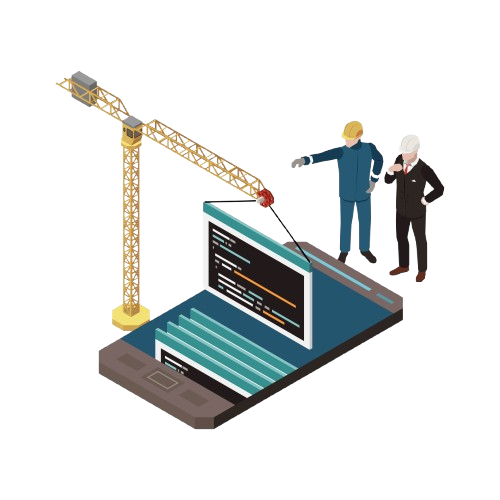
The Problem
Construction sites and infrastructure projects face persistent challenges due to limited visibility into structural and environmental conditions. These limitations increase risk, delay response times, and create uncertainty in decision-making.
Key challenges include:
- Lack of real-time structural monitoring during construction phases
- Limited awareness of environmental conditions affecting materials and safety
- Delayed detection of structural stress, deformation, or vibration anomalies
- Dependence on manual inspections that may miss early warning signs
- Fragmented data across systems, preventing unified analysis
- Increased exposure to safety incidents and compliance risks
Structural integrity is not static. Loads shift, materials respond to environmental conditions, and unforeseen stresses can develop over time. Without continuous monitoring, these changes often go unnoticed until they escalate into costly or dangerous situations.
Environmental factors such as temperature, humidity, and air quality also play a significant role in construction quality and worker safety. Variations in these conditions can impact curing processes, material performance, and on-site health conditions.
Traditional approaches cannot keep pace with the complexity and speed of modern construction projects.
The Solution
Structura AI delivers an integrated system that combines smart sensing technologies with AI-driven analytics to provide continuous structural and environmental intelligence.
The system captures data from a network of sensors deployed across construction sites and infrastructure assets. This data is processed through AI models that identify patterns, detect anomalies, and generate actionable insights.
Core elements of the solution include:
- Distributed IoT sensors embedded in structures and site environments
- Real-time data collection across multiple parameters
- AI models trained to detect structural and environmental anomalies
- Automated alerts for risk conditions and threshold breaches
- Centralized dashboards for monitoring and analysis
Structura AI enables teams to move from reactive inspection-based processes to proactive, data-driven decision-making. Instead of waiting for visible signs of failure, stakeholders gain early visibility into potential issues and can take preventive action.
Key Capabilities
Structural Health Monitoring
- Measurement of vibration patterns across structures
- Detection of stress and strain variations in critical components
- Monitoring of displacement, tilt, and deformation
- Identification of structural fatigue over time
- Continuous assessment of load distribution and behavior
These capabilities allow engineers to understand how structures behave under real-world conditions and detect deviations from expected performance.
Environmental Sensing
- Temperature monitoring across materials and site zones
- Humidity tracking for curing and material integrity
- Air quality sensing for dust, particulate matter, and gases
- Detection of environmental conditions affecting safety and performance
- Monitoring of microclimate variations within construction zones
Environmental data provides critical context for interpreting structural behavior and maintaining compliance with safety standards.
AI-Based Anomaly Detection
- Identification of unusual patterns in sensor data
- Detection of early-stage structural issues before visible damage occurs
- Correlation of environmental and structural data for deeper insights
- Continuous learning from historical and real-time data
- Reduction of false alarms through adaptive models
AI enables the system to move beyond simple threshold-based alerts and detect subtle changes that may indicate emerging risks.
Risk Alerts and Notifications
- Real-time alerts for structural or environmental anomalies
- Configurable thresholds based on project requirements
- Notifications delivered to relevant stakeholders
- Escalation workflows for critical events
- Integration with site management and safety systems
Timely alerts ensure that teams can respond quickly and effectively to potential issues.
Data Visualization and Reporting
- Centralized dashboards displaying real-time conditions
- Historical trend analysis for structural and environmental data
- Customizable views for engineers, managers, and safety teams
- Automated reporting for compliance and documentation
- Exportable data for further analysis
Visualization tools help stakeholders interpret complex data and make informed decisions.
How Structura AI Works
Structura AI operates through a structured flow of data capture, processing, and intelligence generation.
Data Capture
Sensors are deployed across structures and site environments to collect continuous data on key parameters such as vibration, stress, temperature, and air quality.
Data Transmission
Collected data is transmitted securely to a central platform through wired or wireless communication systems.
Data Processing
The system aggregates and processes data in real time, preparing it for analysis.
AI Analysis
Machine learning models analyze patterns, detect anomalies, and identify potential risks based on both real-time and historical data.
Insight Delivery
Insights are delivered through dashboards, alerts, and reports, enabling immediate and informed action.
Use Cases
Structura AI supports a wide range of construction and infrastructure scenarios.
Construction Site Monitoring
- Real-time tracking of structural stability during building phases
- Monitoring of temporary structures such as scaffolding and supports
- Environmental monitoring for worker safety and material performance
Infrastructure Projects
- Monitoring of bridges, tunnels, and large-scale structures
- Detection of stress and vibration caused by traffic or environmental factors
- Long-term performance tracking
High-Rise Buildings
- Structural monitoring during vertical construction
- Detection of load imbalances and material stress
- Environmental control for construction quality
Industrial Facilities
- Monitoring of structural components in factories and plants
- Detection of vibration and stress from heavy machinery
- Environmental compliance monitoring
Renovation and Retrofitting
- Assessment of existing structures during upgrades
- Monitoring of structural integrity during modification work
- Risk management for aging infrastructure
Why Now
Several trends are driving the need for systems like Structura AI.
Increasing Focus on Safety and Compliance
Regulatory requirements and industry standards are placing greater emphasis on safety, risk management, and documentation. Continuous monitoring supports compliance and reduces liability.
Growth of Smart Infrastructure
Cities and industries are investing in smart infrastructure that requires continuous data-driven monitoring and management.
Availability of Low-Cost Sensors
Advancements in sensor technology have reduced costs, making large-scale deployment more feasible.
Advances in AI and Data Processing
Improved AI models and computing capabilities enable real-time analysis of large volumes of data.
Complexity of Modern Construction
Projects are becoming larger and more complex, increasing the need for advanced monitoring systems.
Advantage
Structura AI provides a unique advantage by connecting construction-phase monitoring with long-term infrastructure intelligence.
Continuity Across Lifecycle
- Supports monitoring during construction and operation
- Enables transition from project phase to asset management
Data-Driven Decision Making
- Provides objective, real-time insights
- Reduces reliance on manual inspections and subjective assessments
Early Risk Detection
- Identifies issues before they escalate
- Reduces downtime, rework, and safety incidents
Integration with Broader Systems
- Connects with other AIoT systems for a unified view
- Supports cross-functional collaboration
Scalable Deployment
- Applicable to projects of varying sizes and types
- Flexible architecture for different environments
Business Impact
Organizations implementing Structura AI can expect measurable improvements across multiple areas.
Safety
- Reduced risk of structural failures
- Improved worker safety through environmental monitoring
Cost Efficiency
- Lower costs associated with repairs and rework
- Reduced downtime and project delays
Compliance
- Better documentation and reporting
- Easier adherence to regulatory requirements
Operational Efficiency
- Faster decision-making
- Improved coordination across teams
Asset Longevity
- Extended lifespan of structures through early detection of issues
- Improved maintenance planning
Role Within Aperture AIoT Systems
Structura AI is part of a broader ecosystem of AIoT systems designed to transform physical operations into intelligent, data-driven environments.
It works alongside other systems to provide:
- Integrated environmental and structural intelligence
- Cross-system data sharing for deeper insights
- A foundation for developing scalable, data-driven solutions
This integration enables organizations to move toward fully connected and intelligent infrastructure systems.
Future Outlook
The role of structural and environmental monitoring will continue to expand as construction and infrastructure evolve.
Future developments may include:
- Integration with digital twins for simulation and planning
- Advanced predictive models for long-term structural behavior
- Autonomous response systems for risk mitigation
- Expanded use in smart cities and critical infrastructure
Structura AI is positioned to support these advancements by providing a robust foundation for real-time intelligence.
Relevant U.S. and Canadian Standards and Regulations
- OSHA 29 CFR 1926 (Construction Safety Standards)
- OSHA 29 CFR 1910 (General Industry Standards)
- ANSI A10 Series (Construction and Demolition Safety Standards)
- ANSI/ASSP Z590.3 (Prevention through Design)
- ASTM E2026 (Guide for Seismic Risk Assessment of Buildings)
- ASTM E2927 (Guide for Selection and Installation of Sensor Systems for Structural Health Monitoring)
- ASTM D3740 (Minimum Requirements for Agencies Engaged in Testing and Inspection of Soil and Rock)
- ASCE 7 (Minimum Design Loads and Associated Criteria for Buildings and Other Structures)
- ASCE 41 (Seismic Evaluation and Retrofit of Existing Buildings)
- ACI 318 (Building Code Requirements for Structural Concrete)
- AISC 360 (Specification for Structural Steel Buildings)
- NFPA 70 (National Electrical Code)
- NFPA 72 (National Fire Alarm and Signaling Code)
- ISO 13374 (Condition Monitoring and Diagnostics of Machines)
- ISO 13849 (Safety of Machinery)
- ISO 18674 (Geotechnical Monitoring by Field Instrumentation)
- CSA S16 (Design of Steel Structures)
- CSA A23.3 (Design of Concrete Structures)
- CSA Z432 (Safeguarding of Machinery)
- CSA Z1006 (Management of Work in Confined Spaces)
- CSA C22.1 (Canadian Electrical Code)
- National Building Code of Canada (NBCC)
- Canadian Centre for Occupational Health and Safety (CCOHS) Guidelines
Top Players in the Domain
- Bechtel
- Fluor Corporation
- Kiewit Corporation
- Turner Construction
- Jacobs Solutions
- AECOM
- Skanska USA
- DPR Construction
- Clark Construction Group
- Gilbane Building Company
- PCL Construction
- EllisDon Corporation
- SNC-Lavalin
- WSP Global
- Stantec
- Ledcor Group
- Graham Construction
- Aecon Group
Case Studies
United States Case Studies
Structural Monitoring for High-Rise Construction in New York City
- Problem: A high-rise construction project faced uncertainty around structural stability during rapid vertical development. Manual inspections could not detect early-stage stress variations, and environmental conditions such as wind and temperature fluctuations introduced additional risk.
- Solution: We deployed a network of IoT-based structural sensors combined with environmental monitoring devices across key load-bearing elements. Our system integrated BLE-enabled devices to capture vibration and stress data continuously. AI models analyzed patterns and generated alerts for deviations.
- Result: The project team achieved a 35 percent improvement in early anomaly detection, reducing reliance on manual inspections. Structural risks were identified several days earlier than previous methods.
- Lesson Learned: Sensor placement strategy significantly impacts data quality and must be aligned with structural design considerations.
Bridge Monitoring System in Los Angeles, California
- Problem: A major bridge required continuous monitoring due to heavy traffic loads and seismic exposure. Existing inspection cycles were insufficient for detecting dynamic stress changes.
- Solution: Our team implemented a structural health monitoring system using IoT sensors and RFID-enabled maintenance tracking. The system captured vibration, displacement, and environmental data in real time.
- Result: Maintenance response time improved by 28 percent, and structural anomalies were detected before reaching critical thresholds.
- Lesson Learned: Combining structural and environmental data improves predictive accuracy.
Industrial Facility Monitoring in Houston, Texas
- Problem: An industrial facility experienced recurring structural stress due to heavy machinery vibrations. Manual monitoring failed to provide continuous visibility.
- Solution: We deployed IoT sensors integrated with our asset tracking and environmental monitoring systems. AI models analyzed vibration patterns and correlated them with equipment activity.
- Result: Structural stress incidents decreased by 22 percent due to proactive adjustments in operations.
- Lesson Learned: Operational data must be integrated with structural data for accurate analysis.
Tunnel Construction Monitoring in Chicago, Illinois
- Problem: Tunnel construction required precise monitoring of structural integrity under varying soil conditions. Traditional methods lacked real-time visibility.
- Solution: Our system used embedded IoT sensors to monitor deformation, pressure, and environmental conditions. Data was processed through AI models for anomaly detection.
- Result: Early detection of structural deviations reduced rework by 18 percent.
- Lesson Learned: Continuous monitoring reduces costly corrective actions.
Smart Infrastructure Project in San Francisco, California
- Problem: Urban infrastructure required real-time monitoring to ensure safety and compliance under dynamic environmental conditions.
- Solution: We implemented a combination of IoT-based structural monitoring and air quality sensing systems. Our access control and people tracking systems supported site safety.
- Result: Safety incident rates decreased by 25 percent.
- Lesson Learned: Integrated systems provide better outcomes than isolated solutions.
Stadium Construction Monitoring in Dallas, Texas
- Problem: Large-span structures required precise stress and load monitoring during construction.
- Solution: We deployed structural sensors and BLE-enabled tracking devices to monitor material stress and worker safety.
- Result: Structural anomalies were detected 40 percent earlier compared to previous projects.
- Lesson Learned: Real-time data improves construction accuracy.
Parking Structure Monitoring in Miami, Florida
- Problem: A multi-level parking structure faced environmental degradation due to humidity and corrosion.
- Solution: Our IoT-based environmental sensing and structural monitoring system tracked humidity and stress levels.
- Result: Maintenance planning improved, reducing repair costs by 20 percent.
- Lesson Learned: Environmental monitoring is critical for long-term structural integrity.
Data Center Construction in Phoenix, Arizona
- Problem: Temperature and structural stability were critical during construction of a large data center.
- Solution: We deployed temperature sensors, structural monitors, and asset tracking systems for equipment.
- Result: Temperature deviations were reduced by 30 percent, improving construction quality.
- Lesson Learned: Environmental control directly impacts structural performance.
Highway Expansion Project in Denver, Colorado
- Problem: Heavy equipment operations introduced structural stress in temporary supports.
- Solution: Our IoT system monitored stress and vibration while integrating asset tracking for equipment.
- Result: Structural failures were avoided, and downtime reduced by 15 percent.
- Lesson Learned: Temporary structures require the same monitoring as permanent ones.
Hospital Construction in Boston, Massachusetts
- Problem: Strict safety and environmental requirements demanded continuous monitoring.
- Solution: We deployed IoT-based structural and air quality monitoring systems with AI analytics.
- Result: Compliance reporting improved by 35 percent.
- Lesson Learned: Healthcare projects require integrated monitoring systems.
Airport Expansion in Atlanta, Georgia
- Problem: Large-scale construction required coordination across multiple structural zones.
- Solution: Our system combined structural monitoring, people tracking, and access control systems.
- Result: Operational coordination improved, reducing delays by 18 percent.
- Lesson Learned: Multi-system integration enhances project efficiency.
Warehouse Construction in Seattle, Washington
- Problem: Rapid construction schedules limited inspection frequency.
- Solution: We deployed IoT sensors and RFID-based asset tracking systems for real-time monitoring.
- Result: Inspection efficiency improved by 27 percent.
- Lesson Learned: Automation supports faster construction timelines.
Canadian Case Studies
High-Rise Monitoring in Toronto, Ontario
- Problem: A high-rise project required continuous monitoring of structural stress and environmental conditions.
- Solution: We implemented IoT sensors and AI analytics for real-time monitoring.
- Result: Structural anomalies were detected 32 percent earlier.
- Lesson Learned: Early detection improves safety outcomes.
Bridge Infrastructure in Vancouver, British Columbia
- Problem: Bridge structures required monitoring due to environmental exposure.
- Solution: Our system combined structural monitoring with environmental sensing.
- Result: Maintenance efficiency improved by 25 percent.
- Lesson Learned: Environmental factors must be continuously tracked.
Industrial Construction in Calgary, Alberta
- Problem: Heavy equipment operations introduced structural risks.
- Solution: We deployed IoT sensors and asset tracking systems.
- Result: Operational risks decreased by 20 percent.
- Lesson Learned: Equipment tracking supports structural monitoring.
Transit Infrastructure in Montreal, Quebec
- Problem: Underground construction required precise monitoring.
- Solution: Our system used IoT sensors and AI models for real-time analysis.
- Result: Rework was reduced by 17 percent.
- Lesson Learned: Real-time insights improve project outcomes.
Commercial Development in Ottawa, Ontario
- Problem: Environmental conditions affected construction quality.
- Solution: We deployed environmental sensing and structural monitoring systems.
- Result: Quality issues decreased by 22 percent.
- Lesson Learned: Environmental monitoring is essential for construction quality.