From IoT Data to AI-Native Companies
Transforming Real-World Signals into Intelligence and Ventures
Aperture AIoT operates at the intersection of physical systems and artificial intelligence. The platforms capture data from real environments, convert that data into structured intelligence, and use it to build focused, scalable companies that solve clearly defined operational problems.

Turning Physical Data into Scalable Innovation
Physical industries generate vast amounts of data through sensors, machines, and operational systems. Much of this data remains underutilized due to fragmentation and lack of real-time interpretation.
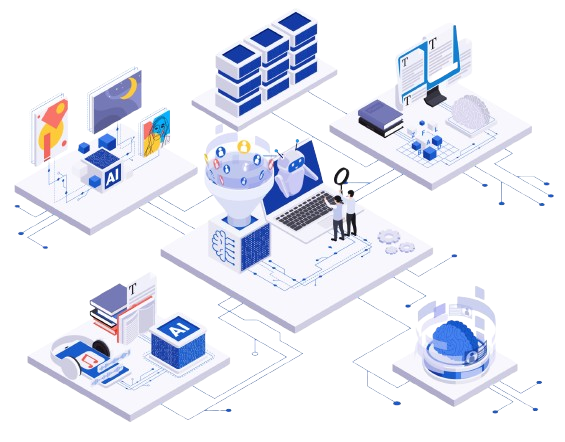
Aperture AIoT connects data capture, intelligence, and execution into a unified system. Operational signals evolve into insights, and insights evolve into companies.
This creates a repeatable model for Systems creation based on real demand rather than speculation.
Traction And Validation
Aperture AIoT is built on real deployments and continuous industry engagement. The Platform reflect patterns observed across multiple operational environments.
Hundreds of deployments across industrial and commercial environments
Cross-industry applications spanning manufacturing, healthcare, logistics, and more
Continuous inbound inquiries from organizations seeking solutions
Each deployment contributes data and insight, strengthening the platform and informing future Systems.
What This Enables
Organizations engaging with Aperture AIoT benefit from a system grounded in real-world use cases.

Faster identification of high-value operational problems
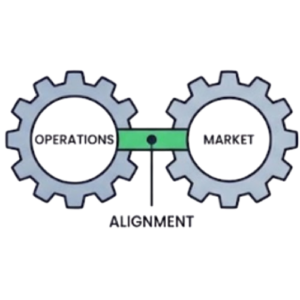
Strong alignment with existing market demand
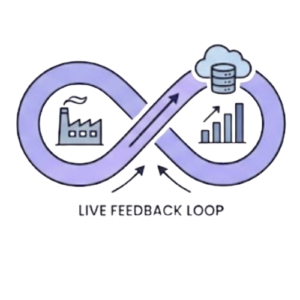
Continuous improvement driven by live deployment feedback
How Aperture AIoT Works
A structured pipeline connects physical systems to Systems creation.
Data Capture Layer (IoT)
Sensors, RFID systems, and connected infrastructure collect real-time data from physical environments.
- Asset movement and utilization
- Inventory levels and workflow progression
- Personnel location and activity
- Environmental and operational conditions
This layer creates a continuous stream of operational data.
Intelligence Layer (AI)
Machine learning models analyze and interpret collected data.
- Pattern recognition across workflows and systems
- Detection of inefficiencies and anomalies
- Prediction of operational risks and outcomes
- Generation of actionable insights
Raw data becomes structured intelligence that supports decision-making.
Systems Creation Layer
Insights are translated into focused companies built around repeatable problem patterns.
- Each Systems targets a specific operational challenge
- Solutions are based on validated demand and real data
- Companies are structured for scalability and independence
This creates a direct pipeline from data to company formation.
Why This Approach Works
Traditional startups often rely on assumptions about market needs. Aperture AIoT is grounded in observed problems and proven demand.
This reduces risk and increases the probability of building solutions that deliver measurable value.
Platform Capabilities
The Aperture AIoT Platform consist of modular systems that capture and analyze different aspects of physical operations.
Asset Tracking and Visibility
Track location, status, and utilization of assets across workflows
Inventory and Operations Optimization
Monitor inventory and optimize processes using real-time data
People Tracking and Safety Systems
Understand workforce movement and improve safety monitoring
Access Control and Security
Manage access using context-aware intelligence
Integrated System Intelligence
Each module captures a different dimension of operations. Combined, they provide a unified view of how systems function.
Cross-system visibility into workflows and dependencies
Identification of patterns across multiple operational domains
Improved prediction accuracy and decision support
The modular architecture allows flexible deployment while enabling long-term scalability.
Systems Portfolio
Aperture AIoT transforms operational insights into focused, scalable Systems.
Featured Systems

Sentra AI
- Workforce safety and access intelligence
- Real-time tracking and risk detection
- Context-aware access and compliance monitoring
CryoTrace AI
- Cold chain monitoring and traceability
- Environmental tracking across supply chains
- Detection of anomalies and predictive risk alerts
FlowCore AI
- Manufacturing intelligence and workflow optimization
- Visibility into asset and process interactions
- Identification of inefficiencies and throughput improvement
Systems Development Model
Each Systems is derived from:
- Real-world deployments
- Repeatable operational problem patterns
- Clear and ongoing demand signals
This ensures strong alignment between product development and market needs.
Industries Served
Aperture AIoT applies its Platform across industries where physical operations generate complex and valuable data.
Manufacturing
- Optimize production workflows
- Improve asset utilization
- Reduce downtime
Healthcare
- Track critical assets and specimens
- Improve compliance and safety
- Enhance operational visibility
Logistics
- Monitor supply chain conditions
- Track shipments and inventory
- Improve coordination across networks
Construction
- Track equipment and personnel
- Enhance safety compliance
- Monitor project execution
Cross-Industry Intelligence
Data collected across industries reveals patterns not visible within a single domain.
- Transfer of solutions across sectors
- Identification of shared operational challenges
- Development of scalable systems across use cases
U.S. and Canadian Standards and Regulations
- OSHA 29 CFR 1910
- OSHA 29 CFR 1926
- ANSI Z117.1
- ANSI/ISA-95
- ANSI/ISA-99 / IEC 62443
- NIST Cybersecurity Framework
- NIST SP 800-53
- FDA 21 CFR Part 11
- FDA 21 CFR Part 820
- FSMA
- CSA Z1000
- HACCP
- ISO 9001
- ISO 14001
- ISO 45001
- ISO 22000
- ISO/IEC 27001
- ISO/IEC 27701
- ISO 13485
- ISO 28000
- ISO 22301
- CSA C22.1
- UL 2900 Series
- FCC Part 15
- HIPAA
- EPA Clean Air Act
- EPA Clean Water Act
- Transport Canada TDG Regulations
- Canadian Environmental Protection Act (CEPA)
- Canadian Centre for Occupational Health and Safety (CCOHS) Guidelines
- PIPEDA
Top Players in the Domain
- Manufacturing enterprises
- Automotive and aerospace manufacturers
- Healthcare systems and hospitals
- Pharmaceutical and biotechnology companies
- Logistics and supply chain operators
- NIST Cybersecurity Framework
- Warehouse and distribution centers
- Food and beverage producers
- Cold chain logistics providers
- Construction and infrastructure firms
- Energy and utilities operators
- Mining and industrial operators
- Government and public sector agencies
- Smart facility and building operators
- Research laboratories and testing facilities
Case Studies
United States Case Studies
Manufacturing Workflow Optimization in Detroit, Michigan
Problem
A manufacturing facility faced inconsistent production output due to limited visibility into asset movement and workflow dependencies. Manual tracking methods delayed identification of bottlenecks.
Solution
We deployed BLE and RFID-based asset tracking integrated with workflow intelligence systems. GAO enabled real-time monitoring of equipment movement and process flow, providing actionable insights for optimization.
Result
Production throughput improved by 17 percent and process delays decreased by 22 percent. A key lesson involved calibrating data collection intervals to balance system performance and insight accuracy.
Workforce Safety Enhancement in Houston, Texas
Problem
An industrial environment lacked real-time visibility into worker movement across hazardous zones, increasing safety risks.
Solution
Our people tracking and access control systems used wearable IoT devices and geofencing to monitor personnel locations and enforce restricted access policies.
Result
Safety incidents reduced by 29 percent and response times improved by 38 percent. A trade-off involved addressing worker concerns related to continuous monitoring.
Cold Chain Monitoring in Chicago, Illinois
Problem
Temperature-sensitive inventory experienced frequent excursions during storage and transit, leading to product loss.
Solution
We implemented IoT-based environmental monitoring systems with predictive analytics to detect anomalies across the cold chain.
Result
Product spoilage decreased by 21 percent and compliance reporting improved. Lesson learned emphasized routine sensor validation to maintain accuracy.
Asset Tracking in Los Angeles, California
Problem
A logistics facility experienced asset misplacement and underutilization due to lack of tracking visibility.
Solution
GAO deployed RFID-based asset tracking systems providing real-time visibility into equipment location and usage patterns.
Result
Asset utilization increased by 26 percent and retrieval times decreased significantly. A trade-off involved integration with legacy infrastructure.
Access Control in New York City, New York
Problem
Fragmented access systems led to unauthorized entry incidents in a secure facility.
Solution
Our access control system integrated IoT sensors with identity-based authentication to enforce policies dynamically.
Result
Unauthorized access incidents dropped by 34 percent. Lesson highlighted alignment between digital permissions and physical operations.
Warehouse Optimization in Atlanta, Georgia
Problem
Inefficient picking processes reduced operational efficiency in a distribution center.
Solution
We implemented BLE-based tracking systems to analyze movement patterns and optimize workflows.
Result
Order fulfillment time improved by 19 percent. Trade-off included workforce training requirements.
Healthcare Asset Visibility in Boston, Massachusetts
Problem
Critical medical equipment was frequently misplaced, impacting patient care timelines.
Solution
Our asset tracking systems provided real-time visibility into equipment locations across departments.
Result
Search time for equipment reduced by 48 percent. Lesson involved ensuring consistent network coverage.
Construction Site Safety in Denver, Colorado
Problem
Limited visibility into worker locations increased accident risks on large construction sites.
Solution
GAO deployed people tracking systems with proximity alerts for hazardous zones.
Result
Safety incidents decreased by 27 percent. Trade-off involved device durability in rugged environments.
Food Processing Compliance in Minneapolis, Minnesota
Problem
Manual environmental monitoring created compliance gaps and delayed reporting.
Solution
We implemented automated IoT monitoring systems for temperature and humidity tracking.
Result
Compliance violations reduced by 88 percent. Lesson emphasized redundancy in monitoring systems.
Smart Parking in San Francisco, California
Problem
Urban facility faced inefficient parking utilization and congestion.
Solution
Our parking control systems used IoT sensors to monitor and manage vehicle flow.
Result
Parking efficiency improved by 33 percent. Trade-off involved integration with existing infrastructure.
Supply Chain Traceability in Dallas, Texas
Problem
Limited visibility into shipment conditions affected product quality and accountability.
Solution
We deployed RFID and environmental sensors to track shipments across the supply chain.
Result
Visibility improved by 39 percent. Lesson highlighted importance of data standardization.
Energy Facility Monitoring in Phoenix, Arizona
Problem
Operational inefficiencies arose from lack of real-time environmental and equipment data.
Solution
GAO implemented IoT monitoring systems for continuous data collection and analysis.
Result
Operational efficiency improved by 14 percent. Trade-off involved optimizing sensor placement.
Canadian Case Studies
Manufacturing Efficiency in Toronto, Ontario
Problem
Production delays were caused by limited workflow visibility.
Solution
We deployed IoT-enabled workflow tracking systems to monitor operations in real time.
Result
Throughput increased by 15 percent. Lesson involved phased deployment to reduce disruption.
Workforce Safety in Calgary, Alberta
Problem
Hazardous work zones lacked effective personnel monitoring.
Solution
Our people tracking and access control systems enabled real-time visibility and compliance enforcement.
Result
Incident rates reduced by 25 percent. Trade-off included managing device maintenance.
Cold Chain Integrity in Vancouver, British Columbia
Problem
Temperature fluctuations impacted product quality during transit.
Solution
We implemented continuous environmental monitoring with predictive alerts.
Result
Product loss reduced by 18 percent. Lesson emphasized proactive calibration practices
Logistics Asset Tracking in Montreal, Quebec
Problem
Assets were frequently misplaced within large logistics facilities.
Solution
GAO deployed RFID tracking systems for real-time asset visibility.
Result
Asset recovery time improved by 43 percent. Trade-off involved system calibration across sites.
Facility Monitoring in Ottawa, Ontario
Problem
Fragmented monitoring systems limited operational visibility.
Solution
We implemented integrated IoT monitoring across facility infrastructure.
Result
Operational costs reduced by 11 percent. Lesson highlighted importance of unified data integration.
Build the Next Generation of Industrial AI Companies
Aperture AIoT is creating a pipeline of Systems based on real-world data and validated demand. Investors, partners, and operators can participate in building and scaling these companies.
- Invest in emerging Systems
- Partner on deployments and applications
- Join as a Co-Founder
Have an idea, partnership opportunity, or investment interest? Reach out through our Contact Us page to start the conversation and explore how you can be part of building the next generation of industrial AI Systems.